ARCHTOBER
- Tuesday October 20th 2026, 6PM,
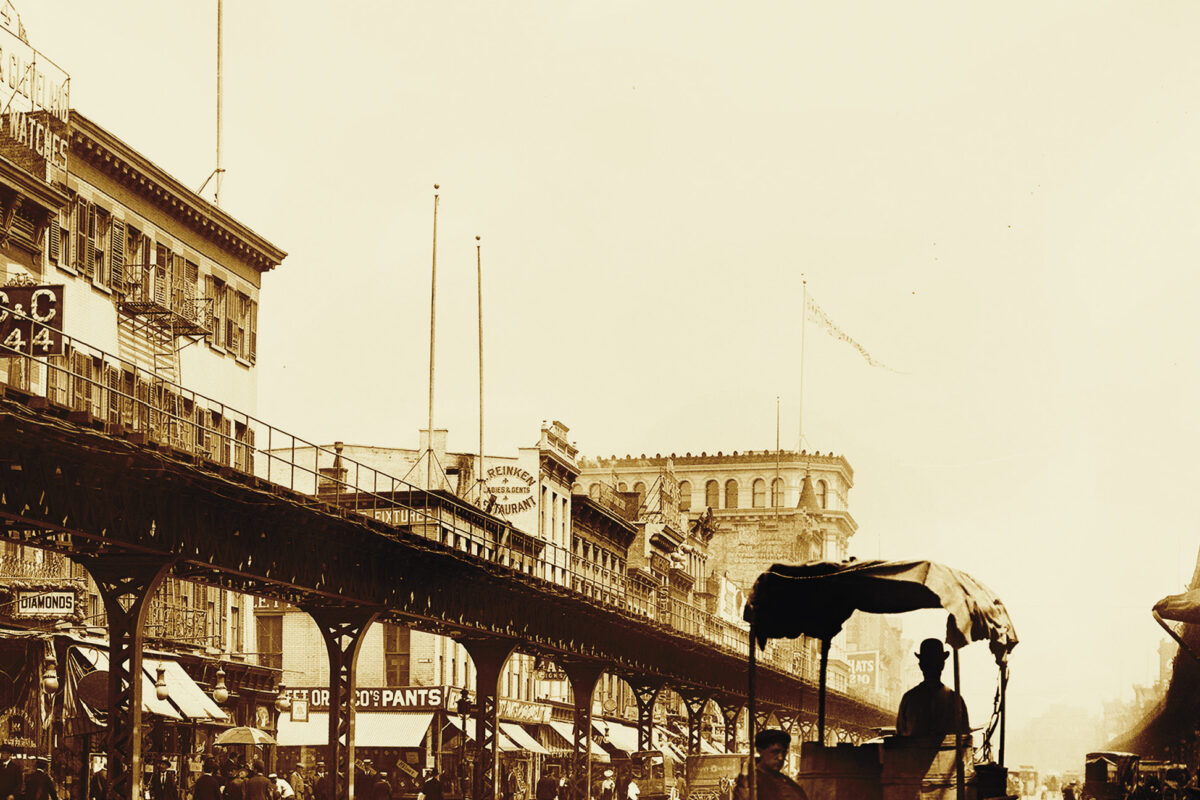
The Forgotten History of the Bowery – From Tap Dance & Vaudeville to SkidRow and Punk Rock with David Mulkins and special guests.
It was originally a Native American Trail, a Dutch Farm Road, a place for Free Black Homesteads, the route Washington took during the British Evacuation, however by the 1800s, The Bowery was the main street of the working class and immigrants. The architecture then included Gilded Age Banks and New York’s oldest brick houses. David Mulkins will discuss this and how it evolved into the stomping ground for sailors, shopgirls, sporting men, gangs, gays, grifters, and the newly arrived immigrant population. The street has seminal ties to tap dance, minstrelsy, vaudeville, Yiddish theater, Stephen Foster, Irving Berlin, modern tattooing, Harry Houdini and Mae West. By the 1900s, the Bowery had also become America’s notorious skid row, but late in that century it helped foster Abstract Expressionism, Beat literature, free jazz, and punk rock. Special guests: Ramona Baker (Ragtime Pianist), Calvin Booker (tap dancer) and Gavin Rice (Singer & Banjoist).
This program is only available IN PERSON
- Tuesday, October 27th 2026, 6pm,
Revisiting Gilded Age New York with Calvert Vaux with historians Francis Kowsky and Sara Cedar Miller
In the second half of the 19th century, New York grew into a true metropolis. Most people know about landscape architect Frederick Law Olmsted’s work here, but in reality, it was his friend and collaborator Calvert Vaux who played the key role in creating both Central Park and Prospect Park in the city, as well as many other works around the country. Vaux also drew the plans for some of the grandest and historically significant buildings of his day. In this presentation, historians Francis Kowsky and Sara Cedar Miller will explore and discuss Vaux’s lasting—and often overlooked—contributions to New York’s urban legacy. Presented in conjunction with the Calvert Vaux Preservation Alliance (CVPA).
For additional information, please write to ktaylor@generalsociety.org